Introduction
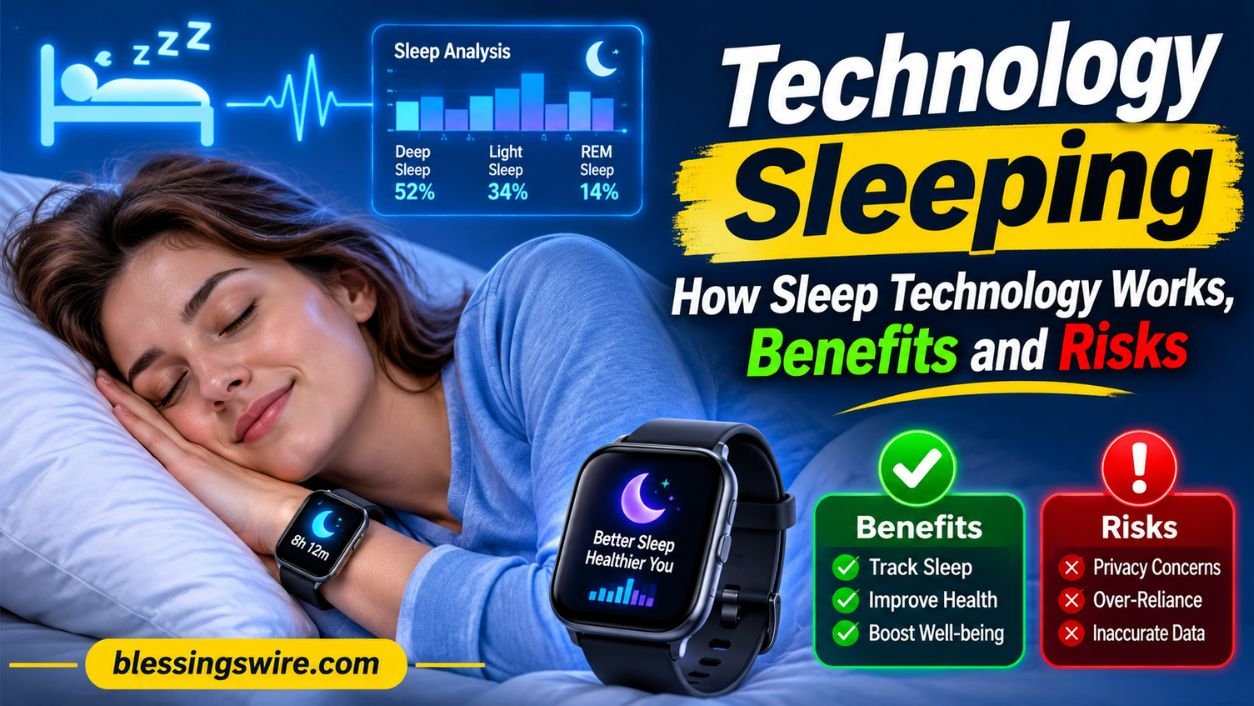
Technology is changing how people understand and manage their sleep. Smartwatches, sleep-tracking applications, smart mattresses, and automated bedroom systems offer new ways to monitor sleep patterns and create comfortable sleeping environments.
Technology sleeping refers to using digital tools and smart devices to monitor, understand, and potentially improve sleep. While these technologies can support healthier routines, excessive screen exposure and nighttime notifications can also disturb sleep.
Understanding how sleep technology works can help you choose useful devices, improve your bedtime habits, and avoid unnecessary spending.
What Is Technology Sleeping?
Technology sleeping describes the relationship between modern technology and sleep, particularly the use of digital devices and connected systems to monitor or support nighttime rest.
It includes several types of technology:
- Sleep monitoring devices: Smartwatches, smart rings, and sleep trackers that estimate sleep patterns.
- Sleep improvement devices: Smart mattresses, adjustable beds, and temperature-control systems.
- Digital sleep applications: Mobile apps that provide bedtime reminders, relaxation exercises, and sleep journals.
- Smart bedroom systems: Connected lighting, sound machines, and automated temperature controls.
For example, someone who frequently wakes up during the night might use a sleep tracker to observe their sleeping patterns. Another person disturbed by outside noise might use a white noise machine to create a more comfortable environment.
How Does Sleep Technology Work?
Sleep technology collects information through sensors, analyzes patterns, and provides feedback or automated adjustments. Different devices monitor different signals, including movement, heart rate, and environmental conditions.
Sleep Tracking and Monitoring
Wearable sleep trackers use sensors to estimate sleep-related information.
Common technologies include:
- Accelerometers to detect body movement.
- Optical sensors to estimate heart rate.
- Temperature sensors to monitor skin or room temperature, depending on the device.
- Other sensors that estimate breathing-related patterns.
A smartwatch, for example, may use movement and heart rate information to estimate how long you sleep and when you wake up.
However, consumer sleep trackers do not measure sleep as comprehensively as clinical sleep studies. Their readings should be treated as estimates rather than medical diagnoses.
Artificial Intelligence in Sleep Technology
Artificial intelligence can analyze sleep-related information and identify recurring patterns.
Some applications use AI to review sleep schedules, activity information, and other measurements to provide personalized suggestions.
For example, an application might highlight that your sleep schedule becomes inconsistent on weekends. These insights can help you recognize habits that may affect your rest, although automated recommendations are not a substitute for medical advice.
Smart Bedroom Automation
Smart bedroom systems use connected devices to manage lighting, temperature, and sound.
Examples include automatically dimming lights before bedtime, adjusting room temperature, and scheduling relaxing background sounds.
These features can make your sleeping environment more comfortable and reduce the need for manual adjustments.
Different Types of Sleep Technology Devices
Modern sleep technology includes products designed to monitor sleep, improve comfort, and support healthier nighttime routines.
1. Smartwatches and Wearable Sleep Trackers
Smartwatches and wearable rings monitor signals such as movement and heart rate to estimate sleep patterns.
Common features include:
- Estimated sleep duration.
- Sleep and wake times.
- Estimated REM and deep sleep stages.
- Nighttime heart rate measurements.
- Sleep schedules and reminders.
These devices are useful for people interested in understanding their sleeping habits. However, their sleep-stage measurements are estimates and should not be treated as clinical results.
2. Smart Mattresses and Sleep Systems
Smart mattresses combine traditional sleeping comfort with features such as temperature control, adjustable positions, and sleep-related monitoring.
Depending on the model, they may offer:
- Adjustable sleeping positions.
- Temperature regulation.
- Personalized comfort settings.
- Movement monitoring.
- Separate settings for different sleepers.
They may be useful for people who want more control over their sleeping environment. However, comfort, support, durability, and price should matter more than the number of smart features.
3. Sleep Tracking Apps
Sleep applications help users record and review sleep-related information.
Popular features include bedtime reminders, sleep journals, guided meditation, relaxation audio, and integration with wearable devices.
Some applications estimate nighttime activity using phone sensors or microphone data. Their measurements are not equivalent to clinical sleep testing.
4. White Noise Machines and Smart Speakers
White noise machines produce consistent background sounds that may help reduce distractions from sudden environmental noise.
Common sound options include:
- White noise.
- Pink noise.
- Rainfall.
- Ocean waves.
- Fan sounds.
- Nature sounds.
Smart speakers can also play relaxing audio and guided breathing exercises. These devices may help people who find background noise distracting, provided the volume remains comfortable.
5. Smart Lighting and Temperature Control
Smart lighting systems allow users to schedule brightness changes and create softer evening lighting.
Smart thermostats and temperature-control systems help maintain a comfortable bedroom environment.
For example, you can schedule bedroom lights to dim before bedtime and adjust the room temperature according to your preferences.
Benefits of Using Technology for Better Sleep
Sleep technology can help people understand their habits, manage their bedroom environment, and develop more consistent routines.
Its main benefits include:
1. Better Understanding of Sleep Patterns
Sleep trackers provide estimates of sleep duration, nighttime movement, and sleeping schedules. Reviewing these patterns may help you identify irregular habits or changes in your routine.
2. More Consistent Sleeping Habits
Sleep applications can provide bedtime reminders and schedule notifications. These features may encourage regular sleeping and waking times, supporting your natural circadian rhythm.
3. A More Comfortable Sleeping Environment
Smart lighting, temperature controls, adjustable beds, and sound machines can help manage bedroom conditions that affect comfort.
4. Support for Relaxation
Some applications offer guided meditation, breathing exercises, and calming audio. These features can help users establish a relaxing routine before bedtime.
5. Greater Awareness of Daily Habits
Tracking information alongside a simple sleep journal may help you notice relationships between daily activities and changes in your sleep schedule.
6. Personalized Bedroom Experiences
Connected bedroom systems allow users to customize lighting, temperature, and sound settings according to their preferences.
Technology is most useful when it supports healthy habits rather than replacing them.
How Technology Can Negatively Affect Sleep
Although technology can support better sleep routines, excessive or poorly timed device use can create problems. Smartphones, tablets, computers, and nighttime notifications may interfere with relaxation and the body’s natural sleep-wake cycle.
1. Blue Light and Screen Exposure
Using bright screens late at night can affect circadian rhythms and make it harder for some people to fall asleep. Phones, tablets, and computers can also keep users mentally engaged when they should be preparing for rest.
To reduce nighttime screen exposure:
- Lower screen brightness in the evening.
- Avoid unnecessary phone use before bedtime.
- Use softer lighting at night.
- Establish a regular time to stop using electronic devices.
Night mode may reduce certain types of light exposure, but it does not remove the effects of stimulating content or late-night browsing.
2. Notifications and Digital Distractions
Messages, social media alerts, and emails can interrupt relaxation and encourage people to keep checking their phones.
Enable Do Not Disturb mode, silence unnecessary notifications, and avoid keeping frequently used devices close to your pillow.
3. Sleep Tracking Anxiety
Some users become overly concerned about achieving a perfect sleep score. Constantly checking sleep measurements can create unnecessary stress instead of making bedtime more relaxing.
This behavior is sometimes called orthosomnia, a term describing an unhealthy preoccupation with achieving ideal sleep measurements.
Focus on long-term patterns and how rested you feel rather than worrying about every daily score.
4. Dependence on Sleep Gadgets
Some people become convinced they cannot sleep without a particular application, sound machine, or tracking device.
Sleep technology should support your natural routine rather than become something you depend on completely. Simple habits such as reading, maintaining regular sleeping hours, and keeping your bedroom comfortable are also valuable.
5. Privacy and Personal Data Concerns
Sleep devices and applications may collect information such as sleep schedules, movement, heart rate, and other health-related measurements.
Before using a connected device, review its privacy policy, data-sharing settings, account permissions, and subscription requirements.
6. Incorrect Sleep Measurements
Consumer sleep trackers estimate sleep-related information using sensors and software. Their accuracy varies, particularly when estimating sleep stages and nighttime interruptions.
According to the American Academy of Sleep Medicine, consumer sleep technologies should not replace validated medical evaluations or be used independently to diagnose sleep disorders.
If you regularly experience loud snoring, breathing interruptions, persistent insomnia, or excessive daytime sleepiness, consult a qualified healthcare professional.
Sleep Technology Comparison: Which Device Should You Choose?
The best sleep technology depends on your needs, budget, and sleeping environment. Some devices monitor sleep, while others focus on comfort or reducing environmental distractions.
| Device | Main purpose | Best suited for |
| Smartwatch | Estimates sleep patterns and activity | Sleep monitoring |
| Smart ring | Tracks sleep-related signals | People preferring smaller wearables |
| Smart mattress | Provides adjustable comfort | People seeking customized sleeping conditions |
| Sleep tracking app | Records sleep schedules | Basic sleep monitoring |
| White noise machine | Produces background sounds | People disturbed by noise |
| Smart lighting | Controls bedroom brightness | Nighttime lighting routines |
| Smart thermostat | Manages room temperature | People seeking temperature control |
How to Choose the Right Device
- For sleep monitoring: Consider a smartwatch, smart ring, or sleep application.
- For environmental noise: Choose a white noise machine with adjustable volume.
- For lighting problems: Consider smart lighting with scheduled brightness settings.
- For mattress comfort: Compare traditional and smart mattresses based on support, durability, and comfort.
- For affordable solutions: Start with basic applications and simple bedtime habits.
Before purchasing, check device accuracy, comfort, battery life, compatibility, privacy policies, and ongoing subscription costs.
The best approach is to start with one device that addresses a genuine problem rather than buying several gadgets at once.
How to Use Sleep Technology Effectively
Sleep technology works best when it supports a consistent bedtime routine. Follow these practical steps to get more value from your devices.
Step 1: Identify Your Sleep Problem
Determine whether noise, lighting, temperature, or an inconsistent schedule affects your sleep.
For example, if outside noise is your main concern, a white noise machine may be more useful than an expensive smartwatch.
Step 2: Choose Suitable Technology
Select a device according to your actual needs. Compare features, prices, privacy settings, and compatibility before purchasing.
Step 3: Create a Consistent Bedtime Routine
Use technology to make your nighttime routine easier:
- Schedule bedroom lights to dim before bedtime.
- Silence unnecessary notifications.
- Set a reminder to stop using electronic devices.
- Play relaxing sounds if they help you unwind.
- Maintain consistent sleeping and waking times.
Step 4: Monitor Sleep Patterns
If you use a sleep tracker, review your information periodically. Pay attention to sleep duration, bedtime consistency, and longer-term changes rather than individual sleep scores.
Step 5: Review and Adjust
After using your chosen technology for a few weeks, evaluate whether it provides useful information or improves your comfort.
Remove features that create distractions, unnecessary expenses, or additional stress.
Common Mistakes People Make With Sleep Technology
Using sleep technology incorrectly can reduce its usefulness. Avoid these common mistakes:
- Trusting every sleep score: Remember that consumer trackers provide estimates, not complete medical measurements.
- Buying too many devices: Start with one product that addresses your main concern.
- Using smartphones until bedtime: Reduce screen exposure and silence unnecessary notifications.
- Ignoring healthy habits: Maintain consistent sleeping hours and a comfortable bedroom.
- Ignoring privacy settings: Review permissions and data-sharing policies.
- Expecting gadgets to treat sleep disorders: Seek professional medical advice for persistent sleep problems.
Technology should make healthy sleep habits easier, not create additional problems.
Is Sleep Technology Better Than Traditional Sleep Habits?
Sleep technology can support healthier routines, but it does not replace traditional sleep habits. Smart devices provide convenience and information, while regular sleeping hours, reduced nighttime distractions, and a comfortable bedroom remain essential.
| Area | Traditional approach | Technology-supported approach |
| Sleep schedule | Follow regular sleeping hours | Use bedtime reminders |
| Lighting | Turn off bright lights | Schedule smart lighting |
| Noise | Reduce outside noise | Use white noise machines |
| Temperature | Adjust room temperature manually | Use smart thermostats |
| Sleep monitoring | Keep a written sleep journal | Use wearable trackers |
| Relaxation | Read or meditate | Use guided relaxation apps |
Why Traditional Sleep Habits Still Matter
Healthy sleep habits provide the foundation for good rest. Consider these practices:
- Maintain consistent sleeping and waking times.
- Keep your bedroom dark, quiet, and comfortably cool.
- Avoid excessive caffeine late in the day.
- Reduce stimulating activities before bedtime.
- Exercise regularly.
- Limit unnecessary screen exposure before sleeping.
The CDC recommends turning off electronic devices at least 30 minutes before bedtime as part of healthy sleep habits.
Combining Technology With Healthy Habits
You can combine simple routines with useful technology.
For example, if bright bedroom lighting affects your bedtime routine, establish a regular sleeping schedule and use smart lights to reduce brightness in the evening.
Similarly, someone who struggles with an inconsistent schedule might use a sleep application for reminders while maintaining regular waking times.
More Post: Gramhir.pro Explained: Website, AI Features & Safety Guide
Technology provides convenience, but healthy habits provide the foundation.
The Future of Sleep Technology
Sleep technology continues to develop through artificial intelligence, advanced sensors, wearable devices, and connected bedroom systems.
Future products may offer more personalized sleep-related information and greater automation. However, accuracy, privacy, affordability, and scientific evidence will remain important.
1. AI-Powered Sleep Analysis
AI-powered applications may become better at identifying patterns across sleep schedules, activity information, and wearable measurements.
These insights could help users understand their routines and make practical adjustments. However, automated recommendations will still depend on reliable data and appropriate scientific validation.
2. Advanced Wearable Sleep Trackers
Future smartwatches and rings may offer smaller sensors, improved battery performance, and more convenient monitoring features.
The main goal should be providing meaningful sleep information rather than simply collecting more measurements.
3. Smarter Mattresses and Connected Beds
Smart mattresses may continue developing features such as temperature adjustments, personalized comfort settings, and improved integration with connected bedroom systems.
These developments could make sleep environments more convenient, although comfort and product quality should remain the main purchasing considerations.
4. Personalized Bedroom Automation
Connected bedroom systems may coordinate lighting, temperature, and sound according to individual preferences.
For example, a smart home system could gradually dim the lights in the evening and activate a morning lighting schedule.
5. Greater Focus on Data Privacy
As sleep devices collect more personal information, consumers will need transparent privacy policies and better control over their data.
Important considerations include data storage, third-party sharing, account security, and the ability to delete personal information.
6. Better Integration With Healthcare
Consumer sleep technology may provide information that users can discuss with healthcare professionals.
However, clinical applications require appropriate validation and regulatory oversight. Consumer devices should not be confused with medical diagnostic equipment.
Key Takeaways
Technology is changing how people monitor sleep, manage bedroom environments, and develop nighttime routines.
Here are the most important points:
- Sleep technology includes smartwatches, smart mattresses, tracking applications, and connected bedroom devices.
- Sleep trackers provide estimates of sleep duration and patterns.
- Smart lighting, temperature controls, and sound machines can improve bedroom convenience.
- AI can analyze sleep-related information and provide personalized insights.
- Excessive screen exposure and nighttime notifications can interfere with sleep.
- Consumer sleep trackers cannot replace professional medical evaluations.
- Privacy, accuracy, and subscription costs should be considered before purchasing devices.
- Traditional sleep habits remain essential for healthy rest.
The smartest approach is to use technology to solve specific problems while maintaining simple, consistent sleep habits.
FAQs
1. What does technology sleeping mean?
Technology sleeping refers to using digital devices, applications, and smart systems to monitor, understand, or support sleep. Examples include smartwatches, sleep tracking applications, smart mattresses, and automated bedroom lighting.
2. What technology is best for improving sleep?
The best option depends on your individual needs. White noise machines may help manage distracting sounds, smart lighting can support evening routines, and wearable trackers can provide estimates of sleep patterns.
3. Do sleep trackers accurately measure sleep?
Sleep trackers provide estimates of sleep duration, movement, and sleep stages, but their accuracy varies between devices. They are not equivalent to clinical sleep studies and should not be used independently to diagnose sleep disorders.
4. Can technology negatively affect sleep quality?
Yes. Excessive nighttime screen exposure, bright light, smartphone notifications, and stimulating digital activities can interfere with healthy sleep routines. Reducing screen use before bedtime can help create a more relaxing environment.
5. Are smart mattresses and sleep gadgets worth buying?
They can be useful when they address specific needs, such as mattress comfort, temperature control, or environmental noise. However, expensive gadgets are not essential for everyone. Consider product quality, comfort, privacy, and ongoing costs before purchasing.
6. Can artificial intelligence help improve sleep?
AI can analyze information collected through compatible devices and applications to identify patterns and provide suggestions. However, AI recommendations are not medical diagnoses and should not replace professional advice when persistent sleep problems occur.